Hernández Unveils Agenda in Congress to Tackle Puerto Rico’s Water and Energy Crises
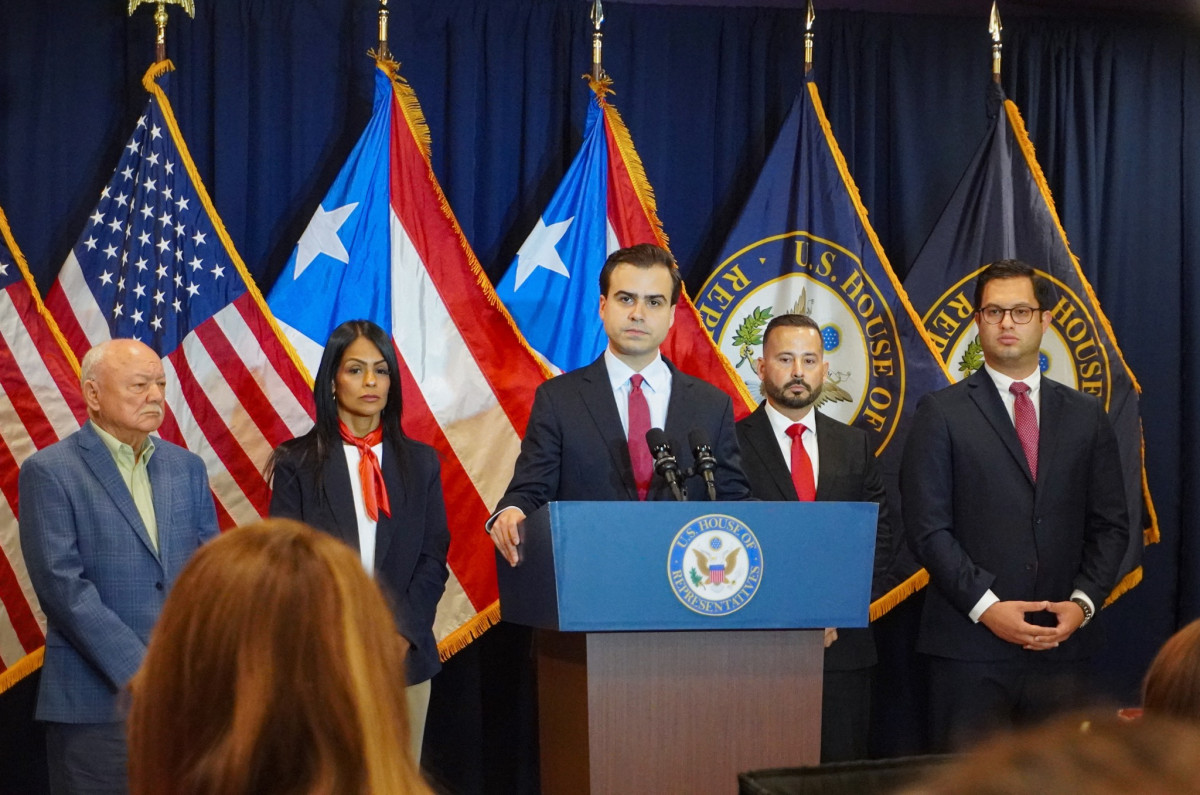
SAN JUAN, Puerto Rico — El comisionado residente en Washington, Pablo José Hernández Rivera, presentó hoy una agenda de cinco puntos para atender las crisis de agua y energía en Puerto Rico, al marcar su regreso a la capital federal tras un mes de trabajo en la isla y el receso de agosto de la Cámara de Representantes.
"Regreso a Washington con una agenda clara: voy a priorizar lo básico, agua y energía," dijo Hernández Rivera. "Antes de hablar de desarrollo económico, de atraer inversión o de decir que Puerto Rico está abierto para hacer negocios, tenemos que priorizar lo básico."
Al regresar a Washington, Hernández Rivera indicó que se mantendrá enfocado en agua y energía a través de las siguientes cinco acciones:
- Solicitará que el Congreso investigue formalmente el escándalo de Power Expectations.
- Exigirá respuestas directas del zar de Energía federal y del presidente del 3PPO sobre el alegado encubrimiento de este escándalo.
- Le dará seguimiento a la inclusión en el Senado de las prioridades de Puerto Rico en el Water Resources Development Act, que incluye hasta $75 millones para proyectos de agua en Puerto Rico y ya fue aprobado en la Cámara de Representantes.
- Le dará seguimiento a la investigación de la Oficina de Rendición de Cuentas del Gobierno (GAO) sobre el uso de los miles de millones de dólares en fondos federales destinados a los sistemas de agua de Puerto Rico y por qué la isla aún no cuenta con servicio confiable.
- Continuará el reclamo por una Declaración de Desastre Mayor y por que se expanda a más municipios la declaración de emergencia por sequía del Departamento de Agricultura federal (USDA).
El comisionado residente repasó además un mes de gestiones concretas en torno al agua:
- 7 de agosto — Presentó un paquete de cinco acciones federales y pidió, por primera vez, que la gobernadora solicite una Declaración Presidencial de Desastre.
- 11 de agosto — Se unió a un grupo de congresistas para exigirle al GAO una investigación exhaustiva sobre el manejo de $9,000 millones en fondos federales para el sistema de agua.
- 13 de agosto — Lideró una carta junto a 25 congresistas exhortando a la gobernadora Jenniffer González-Colón a solicitar formalmente la Declaración de Desastre Mayor.
- 17 de agosto — Su oficina exigió a la Autoridad de Acueductos y Alcantarillados (AAA) datos sobre las pérdidas de agua —cerca del 60% de lo que produce la agencia—, los retrasos en proyectos críticos y el uso de fondos federales disponibles.
- 21 de agosto — Encabezó una gestión junto a nueve miembros del Congreso exigiéndole al USDA la declaración de desastre por sequía.
“Nuestras gestiones han rendido resultados. El 26 de agosto, el USDA aprobó oficialmente la declaración de desastre por sequía para 26 municipios de Puerto Rico, abriendo acceso a préstamos de emergencia y ayudas para los agricultores afectados. Además, logramos incluir 11 prioridades de Puerto Rico —incluyendo $75 millones— en el Water Resources Development Act”, añadió.
El Comisionado Residente estuvo acompañado por el portavoz del PPD en el Senado, Luis Javier Hernández; el portavoz del PPD en la Cámara de Representantes, Héctor Ferrer; la alcaldesa de Naguabo, Miraidaliz Rosario Pagán; la alcaldesa de Loíza, Julia Nazario; y el alcalde de Juncos, Alfredo “Papo” Alejandro, quienes se unieron al reclamo por respuestas y mayor fiscalización ante los problemas que enfrentan sus comunidades.
Alcaldesas de Naguabo y Loíza respaldan gestiones del Comisionado Residente: “Es insólito que haya millones en fondos federales asignados para proyectos de infraestructura y que la burocracia frene su avance. Agradezco al Comisionado Residente por examinar en Naguabo esta realidad. Nos sumamos firmemente a su llamado para que el USDA extienda la declaración de emergencia por sequía a más municipios que están sufriendo esta crisis, así como a su exigencia de investigar a fondo el contrato de energía temporera. Nuestras familias no pueden seguir a la merced de la ineficiencia”, manifestó la alcaldesa de Naguabo Miraidaliz Rosario Pagán.
“Agradecemos las gestiones del Comisionado Residente y su presencia en nuestros municipios para constatar esta grave situación. La falta de agua y luz afecta el comercio, el turismo y la salud mental de nuestra gente, como vemos a diario en nuestro equipo comunitario. Apoyamos al cien por ciento su agenda desde Washington para lograr que la ayuda por la sequía llegue a más pueblos necesitados y para que se le rindan cuentas al país sobre las irregularidades en el contrato de generación temporera”, destacó la alcaldesa de Loíza Julia Nazario.
“Desde el inicio del cuatrienio hemos estado fiscalizando la crisis de agua y energía, denunciando la falta de uso de fondos para la AAA y las malas negociaciones con Genera, New Fortress y Power Expectations. Si el gobierno hubiera atendido nuestras investigaciones desde mayo de 2025, no estaríamos pasando por este bochorno. Nos hemos unido a cada petición del Comisionado Residente, pero han caído en oídos sordos. Reiteramos que el Senado debe convocar una Comisión Total para exigir cuentas sobre la generación temporera y los problemas de agua, donde la verdadera sequía ha sido la mala gerencia del gobierno”, manifestó el portavoz del PPD en el Senado, Luis Javier Hernández
Por su parte, el portavoz de la Cámara de Representantes Héctor Ferrer destacó el impacto al bolsillo de los puertorriqueños: “La sequía está golpeando el bolsillo del puertorriqueño. Lo responsable es solicitar, tal como lo recomendó nuestro Comisionado, al Presidente de los Estados Unidos una declaración de emergencia. La Gobernadora no puede continuar tratando esto como un asunto secundario”, subrayó Ferrer Santiago al tiempo en que insistió en la renuncia del director de la Autoridad de Acueductos y Alcantarillados Luis González Delgado.
###
Hernández Unveils Agenda in Congress to Tackle Puerto Rico’s Water and Energy Crises
Hernández will push to expand USDA’s drought disaster designation to additional municipalities and seek an investigation into Puerto Rico’s temporary power generation contract.
SAN JUAN, Puerto Rico — Puerto Rico’s Resident Commissioner Pablo José Hernández outlined a five-point agenda to address Puerto Rico’s water and energy crises as he returns to Washington following the congressional district work period.
“I’m returning to Washington with a clear agenda: I’m going to prioritize the basics: water and energy,” Hernández said. “Before we talk about economic development, attracting investment, or saying Puerto Rico is open for business, we have to prioritize the basics.”
As he returns to Washington, Hernández said he will remain focused on water and energy through the following five actions:
- Seek a formal congressional investigation into the Power Expectations scandal involving a multibillion-dollar temporary power generation contract.
- Demand direct answers from the federal energy czar and the president of the Third-Party Procurement Office (3PPO), the independent entity that oversaw the procurement process, regarding allegations of a cover-up surrounding the Power Expectations controversy.
- Press the Senate to preserve Puerto Rico’s priorities in the Water Resources Development Act, including up to $75 million for water infrastructure projects, after securing those provisions in the House version of the bill.
- Follow up on the Government Accountability Office (GAO) investigation into how billions of dollars in federal funding for Puerto Rico’s water systems have been used and why the island still lacks reliable water service.
- Continue pressing for a Major Disaster Declaration and for USDA to expand its drought disaster designation to additional municipalities in Puerto Rico.
- August 7 — Unveiled a five-point federal action plan and, for the first time, called on the governor to request a Major Disaster Declaration.
- August 11 — Joined members of Congress in calling on the Government Accountability Office (GAO) to conduct a comprehensive investigation into the management of $9 billion in federal funding for Puerto Rico’s water system.
- August 13 — Led a letter with 25 members of Congress urging Gov. Jenniffer González-Colón to formally request a Major Disaster Declaration.
- August 17 — His office demanded information from the Puerto Rico Aqueduct and Sewer Authority (PRASA) on water losses, which nearly 60% of the water the utility produces, delays in critical projects, and the use of available federal funds.
- August 21 — Led an effort with nine members of Congress calling on USDA to issue a drought disaster designation for Puerto Rico.
“Our efforts are producing results. On August 26, USDA issued a drought disaster designation for 26 municipalities in Puerto Rico, making emergency loans and other assistance available to affected farmers. We also secured 11 Puerto Rico priorities in the House-passed Water Resources Development Act, including up to $75 million for water infrastructure projects,” Hernández added.
The mayors of Naguabo and Loíza, two municipalities particularly affected by water shortages and unreliable service, also expressed support for Hernández’s efforts.
“It is unacceptable that millions of dollars in federal funding have been allocated for infrastructure projects while bureaucracy continues to delay their implementation. I thank the Resident Commissioner for coming to Naguabo to see this situation firsthand. We strongly support his call for USDA to extend its drought disaster designation to additional municipalities affected by this crisis, as well as his call for a thorough investigation into the temporary power generation contract. Our families cannot continue bearing the consequences of government inefficiency,”said Naguabo Mayor Miraidaliz Rosario Pagán.
“We appreciate the Resident Commissioner’s efforts and his presence in our municipalities to see the seriousness of this situation firsthand. The lack of reliable water and electricity affects businesses, tourism and the well-being of our residents, something our community team sees every day. We fully support his agenda in Washington to extend drought assistance to more municipalities in need and to ensure accountability over the concerns surrounding the temporary power generation contract,” said Loíza Mayor Julia Nazario.
The minority leaders of Puerto Rico’s Popular Democratic Party (PPD) in the island’s Senate and House of Representatives also backed Hernández’s push for greater oversight and federal action
“Since the beginning of this term, we have been conducting oversight of Puerto Rico’s water and energy crises, raising concerns about the use of federal funds for PRASA and the government’s agreements with Genera, New Fortress and Power Expectations. Had the government acted on the issues we began investigating in May 2025, Puerto Rico would not be facing this situation today. We have supported each of the Resident Commissioner’s requests, but they have gone unanswered. We again call on the Senate to convene a Committee of the Whole to demand answers on temporary power generation and the island’s water problems. The real drought has been a drought of effective government management,” said PPD Senate Minority Leader Luis Javier Hernández.
PPD House Minority Leader Héctor Ferrer, meanwhile, emphasized the financial impact on Puerto Rican families. “The drought is hitting Puerto Ricans in their pocketbooks. The responsible course of action is to request a presidential disaster declaration, as our Resident Commissioner has recommended. The governor cannot continue treating this as a secondary issue,” Ferrer Santiago said, while reiterating his call for the resignation of Puerto Rico Aqueduct and Sewer Authority Executive President Luis González Delgado.
###